Trust is an important thing for many people. It is also an interesting topic to bring up in conversation. When you ask another individual about their thoughts on trust, they typically will have a quick response, such as, "It is very important to have trust.", or "You need to earn trust." If we assume that both of those above statements are true than we must ask ourselves these two questions: 1. Is it really that important to have trust? 2. How much trust needs to be earned? During my "Techniques for Success Group", I asked the individuals, "Why is it important to trust somebody?" The response I got was that of a crowd that did not speak the same language as me, silence. I decided on switching up the question and asked the group, "Why is it bad to trust somebody?", and suddenly they knew what to say. Within 10 seconds I received feedback that would make you truly believe that trust is something horrible you want to stay away from.
"Trusting people gets you hurt"
"You get screwed over"
"People take advantage of you"
"You become weaker to other people"
The human mentality to pursue pleasure (instant gratification) and avoid pain has made even the ability to trust a painful thing. So what needs to happen? In order to reestablish our trust in trust, we must follow the "Top 2 Ways to Improve Trust". I. Finally give ourselves some credit! Although we may believe that others need to "earn your trust", you give out enough for free. Humans inherently want to love and be loved by others. This allows us to trust people right away. Of course, the degree of trust and the events that can diminish or ignite it can vary greatly, but as a whole, we innately want to trust other humans. Have you said hi to a stranger in the past 30 days, had a conversation with somebody you didn't know too well, or played on a sports team before? If you said yes to any of these questions, you are guilty of instilling trust into another human instantly. We do this all of the time, and that is ok, even great at times. Understanding that there is a standard amount of instant trust you allow for each individual (will vary per individual) and learning how to build on it will allow you to fulfill your need of connection/love far greater and faster than before. GIVE YOURSELF CREDIT! II. The Million Dollar Question to building trust.
After acknowledging and accepting that you allow other individuals to have a small amount of "instant" trust and giving yourself credit for it, you must ask yourself this question.
If you were to be paired with a complete stranger and placed in a room for 1 hour with the goal being to leave the room 1 hour later trusting each other the most possible, what would you be doing during that hour? This simple question that is easy for some and near impossible for others will create a cheat sheet for easy ways to develop secure connections and trust.
Some of you may remember Fred Rogers as an American educator, Presbyterian minister, songwriter, author, or television host, but most remember simply by saying "Mister Rogers". Each episode of "Mister Rogers' Neighborhood" began the same way: Mister Rogers is seen coming home, singing his theme song "Won't You Be My Neighbor?", and changing into his sneakers and infamous old man cardigan sweater.
I am pretty confident that Mister Rogers made cardigans look cool for first time ever, or maybe it is just the comfortable old man in me speaking.
What many people didn't know about Fred Roger is how much of an advocate he was.
May 1, 1969
President Nixon attempts to decrease funding to PBS by 50% ($20 million --> $10 million).
Fred Rogers goes before the Senate to defend the funding to PBS.
Fred Rogers defends children, the messages we send to our younger population through television, the mental health field, therapy/counseling, and emotional expression.
Fred Rogers proclaims the dramatic power of emotional expression amongst men (at this time many male soldiers were coming back from Vietnam).
In the late 1960's, Fred Rogers made it crystal clear that he was deeply concerned with what was being delivered to our children via television and radio. Working with children most of his life, Fred, was driven to understand children's needs and the "inner drama of childhood".
For those parents that wish to provide their children with the best opportunities given your situation and resources listen closely to the message being conveyed by Fred Rogers.
"This is what I give. I give an expression of care
every day to each child,
to help him realize that he is unique."
Mister Rogers focuses on fulfilling a child's need of significance and connection/love.
He fulfills their need of significance through making the children feel unique, important, and noticed by just being who they are, nothing more.
He fulfills their need of connection/love through listening to the children, spending time with them, and overtly vesting interest in their well-being.
Here are a few messages Fred was trying to get across in his Senate Hearing in 1969:
1. You are unique, just the way you are
2. Feelings are mentionable and manageable
3. Managing your feelings is far more dramatic then showing violence
4. We can model these principles through television and parenting
Watch the actual Senate Hearing in 1969 and see how Fred Rogers gets Senator Pastore of Rhode Island to admit he got "goosebumps".
If you are a parent, grandparent, sibling, babysitter, nanny, or anyone that has been around a baby for more than a few seconds I am sure there have been a few moments when you said to yourself,
"Okay baby, I would of done the same thing."
This brings up an interesting question of whether or not babies and adults make decisions the same way.
On many levels an adult's ability to make rational, safe, healthy, and mindful decisions are far different than that of a baby, but what if the driving forces and motivations behind our decisions were the same?
My decision is...
I choose...
As humans, we ALL have needs and those needs must be met. When they are not met we tend to end up in the following situations:
unhealthy relationships
arguments
sacrificing happiness
meaningless employment
lack of fulfillment
decreased motivation
lack of confidence
The catch here is that adults have the ability to learn how to meet our needs in unhealthy ways, such as:
abusive relationships
one-sided friendships
drug/alcohol use (social use, abuse, and dependency)
pursuing very easy (non challenging) tasks
pursuing extremely hard tasks(near impossible based on our ability level)
maintaining a depressed state
maintaining an anxious state
*This list to simply a fraction of how we can meet needs in unhealthy ways.
You may be wondering what those needs are...
Without further adieu I present to you the "6 Human Needs" that drive our decision making process and motivate our behaviors (regardless of age).
Certainty:
Our need to be safe, secure, and comfortable. The need to know that will we experience pleasure and avoid pain.The feeling of knowing everything will be okay.
Variety:
The need for physical and mental stimulation. Our need to experience various emotions, physical sensations, and mental states.
Connection/Love:
The need to be love and connected with others. Our need to be part of something bigger (a group, family, club, friendship, religion, political party..etc). As human, we have a severe "fear of rejection" and ultimate fear of "not being worthy of love", so we usually shy away from love and stick with the safe (and certain) connection with others.
Significance:
The need to feel noticed, important, unique, and worthy of attention.
Growth:
Our need to develop, grow, and expand through time.
Contribution:
The need to contribute outside and beyond ourselves as individuals.Many forms of contribution are volunteering, donating to charities, educating others, mentoring, and so on.
Individuals of all ages, make decisions and behave in particular ways based off of whether or not these needs are being met and to what degree they are satisfied.
"Real Life Practice" An assignment I usually give to my clients that I am passing on to you challenges them to look at this list and see which 2 needs drive and lead your life.
Doing this will allow you to understand why certain past decisions were made and how to be more mindful in the future.
Follow this, try to identify your significant other's, spouse's, or parent's top 2 needs driving and leading their life. This will put you in a more tactful and understanding position when trying to understand where people close to you are coming from and how to interact with them.
Please share your thoughts and the progress you have been making on this blog below or on YouTime Coaching's Facebook page! YouTime Coaching on Facebook
If not or you would like some redemption from a previous attempt, here is your chance.
So what is your guess?
70...
80...
90...
100?
WRONG!
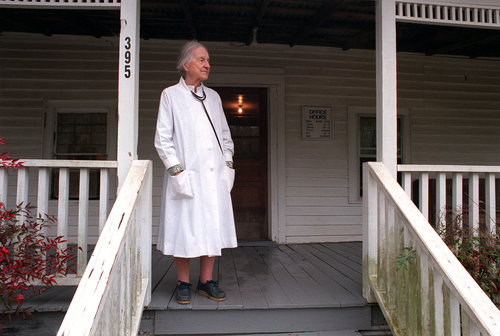
This young lady is 114 years old
Say hi to Leila Denmark from Athens, Georgia.
Leila was born February 1, 1898.
You heard me, at the end of the 1800's!
You see Leila was a Doctor and had practiced medicine for more than 70 years. Take a second to realize some of the world changing events she was present for, the entire industrial revolution, new vaccines, epidemics, massive wars, and thousands of deathly maladies. When Leila was 18, she wasn't allowed to vote, because WOMEN WERE NOT ALLOWED TO VOTE IN 1916! She experience the Women's Suffrage Movement.
Leila absolutely loved practicing medicine, connecting with others, and contributing to her world. She was so passionate about these concepts that she completely modeled her private practice on it.
Sounds nice, huh?
Somewhat ass backwards from our nation's current health insurance situation.
Leila Denmark passed away April 1, 2012 in her hometown Athens, Georgia.
Although she is no longer with us, Leila left some powerful information and life lessons gained through her life and never let go of her core belief,
18 Life Lessons from a 114 year old Doctor:
1. Don’t abuse your body with junk food
2. Love what you do
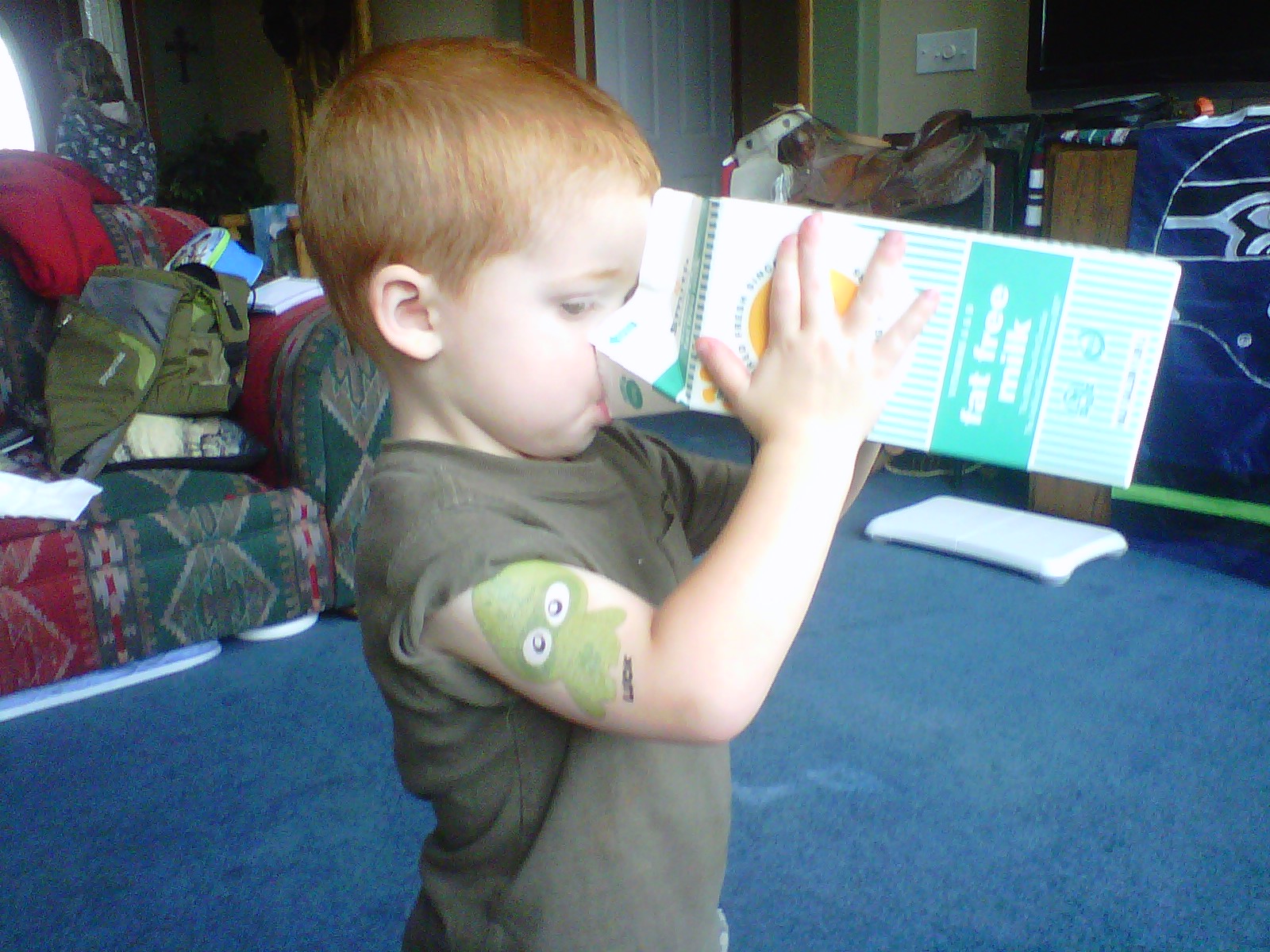
3. Drinking cow’s milk is dangerous
4. Do your best to help others
5. Too much sugar is not a good thing
6. A sense of humor is very important for longevity
7. As a doctor, it’s important to find the root cause of a problem
8. Children are not getting parental guidance and it’s wrecking this nation
9. Kids in daycare are deprived of attention and catch too many illnesses
10. We need to think about everything we eat and drink
11. “Let’s do” is easier than do
12. Anything you have to do is work and anything you love to do is play
13. During the Great Depression, 11,000 of America’s 25,000 banks closed (Save what you can, appreciate what you have.)
14. Never raise your hand or your voice to a child
15. Parenting has gone out of style
16. Children and adults should eat fruit instead of drinking fruit juices
17. Drink only water
18. The greatest change she’s seen in her lifetime has been the neglect of little children
Raise your hand if you have seen these ads before.
David Beckham drinks milk and forgets to wipe off his upper lip.
Danica Patrick drinks milk and leaves it on her face.
Taylor Swift equally drinks milk and flaunts the residue.
Ok, put your hands down.
So if you have read the ads, like I did, what we can assume is:
David Beckham does NOT work out, he simply drinks milk.
NASCAR drivers work out (did you know this, because I didn't.)
In the music industry apparently the most important decision to make is whether or not to drink milk, because this is how Taylor Swift got famous, skinny, and muscular all at the same time.
Does this make sense to you?
Milk has been for quite a long time our staple source of calcium.
The United States is habitually grazing the top of the list in milk production, consumption, and exporting.
If milk builds strong bones, than shouldn't we have some of the strongest bones in the world? After all, we are at the top of the list in milk consumption.
This idea has made many scientists from some of the top universities (Harvard Medical, Cornell, Stanford, Yale, Tufts...etc) question milk as our source of calcium and decide to do some more research.
Their findings,
there is no significant research to prove that milk consumption strengthens bones and a growing body of research that shows milk does the opposite.
*These are not my opinions, nor the opinions of the Doctors that performed the studies. This is objective data.
If we drink the most milk, we should have the strongest bones (because that is what milk is supposed to do), but we have some of the weakest bones in world. There is a flaw in this logic.
When you walk into your local pharmacy go check out the supplement and vitamin sections. Count how many calcium supplements are there for you to purchase over the counter.
Pill Man
Why are there so many of these supplements here?
Do your own research, figure this one out, but in the meantime I have some vital advice.
Get your calcium from the food you eat.
This is a list of the some of the top calcium enriched foods to eat (that don't cause osteoporosis):
So the next time you see a "Got Milk" advertisement channel your inner Anchor Man Ron Burgundy...
Remember when graduating from a College or University was a big deal for you and your family?
A decade later a belief that getting a Master's degree was the new undergraduate degree?
And now, is getting a Doctorate the new norm?
The point is, WE DO NOT KNOW.
All of the assumptions about job certainty, salary, and the freedom to find enjoyable employment are up in the air with whatever degree you have. I was just forwarded the other day an article about how there is a massive increase in PhD level individuals that are receiving food stamps!
That screams uncertainty.
Last time I checked, "Certainty" was one of our 6 Humans Needs that we constantly try to fulfill.
When individuals, like you and I, do not have Certainty we have a higher tendency to be anxious, fearful, and stressed, which will very rarely help you find a job.
In the interview, notice how much focus is on Growth and Contribution for Becky.
Today I want to share with you an great example of a success story.
Her name is Rebekah and she has a job she loves. Rebekah and I sat down for a wonderful interview about her search for meaningful employment, how tough it was, her mindset going into the experience, and what results she saw. ENJOY!
Keep this quote in mind as you read the interview with Becky:
"When you know somebody's strategy, you can duplicate ANYTHING great that has ever been done"
- Tony Robbins, Peak Performance Strategist
YouTime: Becky, you graduated from Boston University with a Master's degree in Counseling with a specialization in Sport Psychology, did you believe finding a job would be an easy task?
Becky: Well, while I was in school I thought it would be easy but as I started hearing from professors, advisers, and peers that finding a job in the Sport Psychology field was very tough and that you would need to develop your own niche, I began to think twice.
YouTime: So after getting some of that feedback, how did it affect your mindset and beliefs about finding employment after graduation?
Becky: It was important that I stayed positive but had to be realistic about what I was about to dive into. The realistic part allowed me to go outside of getting the "perfect job". I started to think of different types of jobs that I would be willing to work at. In the end, this helped widen my scope of possibilities.
Seem all too familiar?
YouTime: After you shifted your mindset and beliefs to being more positive and realistic, how did the job search actually play out?
Becky: It was a lot of work. I spent a lot of time connecting with the resources around me, friends, family, old colleagues, LinkedIn, and online job sites to find opportunities. I put in a lot of time doing searches, sending out materials, and following up.
YouTime: It sounds like you took a lot of action.
Becky: After school I was ready to move on to work and it definitely helped motivate me.
YouTime: So what kind of results did you see from the work you put in?
Becky: I had 5 interviews in 5 days and got a job within a month of graduating. I ultimately found the job on Craigslist.
YouTime: Those are some pretty impressive results! I am sure it felt great to have all your hard work pay off.
Becky: It definitely did. It was funny, I had to choose between a few different opportunities and decided to take a job I was supposedly "over-qualified" for and payed the least.
YouTime: What motivated you to make that decision?
Becky: When I went for the interview and found out more details about the job, which was a position in an all girls residential facility, I knew that I could help these kids without even meeting them. I couldn't quite put my finger on it, but I knew a could contribute something great to their lives. It worked out great, this is how I connected with Doc Wayne and began working for them.
YouTime: Now you are the General Manager at the Doc Wayne Athletic League and have such an integral role in many youth's lives. That must be very rewarding. Do you feel as though the role at Doc Wayne allows you to grow as an individual?
Becky: Before coming here I didn't know my strengths as well and I didn't have much self-confidence. I felt like I was just one person in a group of people with the same skills and strengths. Doc Wayne has helped me find my specialization in working with people and my strengths (once fears) of public speaking, working with trauma victims, and adolescent girls. When I was told I would be the "voice of the kids" the anxiety of public speaking left and I knew now that I had to advocate for them.
This is Becky, somebody who truly believes in their work.
What we can learn from Becky, her mindset, and experience is:
1. Your beliefs will directly impact your results
2. A massive amount of action must be taken
3. A shift in beliefs may be necessary to reach your outcome.
4. Look for something you enjoy, just because you are good at it doesn't mean you will enjoy it.
5. Understand how it helps you grow and contribute outside of yourself.
Rebekah Conway Roulier, Ed.M. is the General Manager at the Doc Wayne Athletic League, Inc. a 501 (c)(3) and is responsible for sports programs and training of coaches in current and future markets, the enhancement of the organization’s do the good (DtG) therapeutic curriculum and management of the monitoring and evaluation systems. She comes to the Doc Wayne with an Ed.M. in Counseling with a Specialization in Sport Psychology and with extensive experience in coaching and work in youth services.
Rebekah has a B.A and Ed.M. from Boston University.
Rebekah’s work with victims of complex trauma and underserved children includes experience in a residential treatment center, a position as an identity building consultant, and instructor for a positive psychology and sports program serving children and adolescents in the California juvenile justice system. She recently presented at The Northeast Atlantic Sport Psychology Conference (Philadelphia, PA) on “The Use of Sport in the Behavioral Health Treatment of Youth," was a panelist on “Young Minds Behind Bars: The State of Mental Health Care within the Juvenile Justice System” sponsored by Wheelock College and presented on the ethics of sport at Moving Traditions Celebr8-U Conference.